
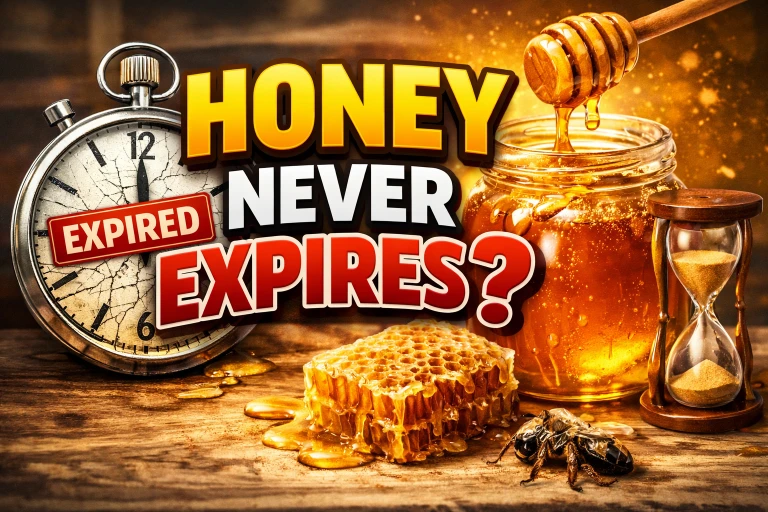
Honey Never Expires?
The Truth Behind Honey Expiry Dates That Confuse Everyone
If honey never goes bad, then why do bottles carry expiry dates?
This single contradiction has confused buyers for years and quietly damaged trust in real honey. Some people believe expired honey is dangerous. Others believe expiry dates are proof that honey is fake.
Both assumptions are wrong.
This article explains whether honey actually expires, why expiry dates exist, how to tell spoiled honey from crystallized honey, and what really determines honey’s shelf life—using science, food chemistry, and real-world handling practices.
Does Honey Really Expire?
No. Pure honey does not expire.
Archaeologists have discovered edible honey in ancient Egyptian tombs that is over 3,000 years old. Its structure remained intact because honey is naturally hostile to bacteria and microorganisms.
This is not folklore. It is chemistry.
Why Honey Is Naturally Self-Preserving
Honey resists spoilage due to four core properties:
1. Extremely Low Water Activity
Most bacteria need moisture to grow.
Properly matured honey has less than ~18.5% moisture, making microbial growth almost impossible.
2. Natural Acidity
Honey has a pH typically between 3.2 and 4.5, which inhibits bacteria and fungi.
3. Hydrogen Peroxide Formation
Raw honey contains glucose oxidase, an enzyme that slowly produces hydrogen peroxide when honey comes into contact with moisture.
This creates a mild but continuous antibacterial environment.
4. High Sugar Concentration
The dense sugar structure draws moisture out of microorganisms, preventing survival.
Together, these factors make honey one of the most shelf-stable foods on Earth.
Then Why Do Honey Bottles Have Expiry Dates?
Expiry dates on honey are regulatory and commercial, not biological.
Manufacturers add expiry or “best before” dates because:
- Food labeling laws require a date
- Packaging materials may degrade
- Texture and appearance may change
- Consumers expect visible timelines
The date does not indicate spoilage.
In most cases, it marks:
“Best texture and appearance until this time.”
What Changes Over Time (And What Does Not)
Honey does change—but it does not rot.
What may change:
- Color (may darken)
- Texture (crystallization)
- Aroma (becomes richer)
What does NOT change:
- Safety
- Sugar structure
- Edibility
- Core nutritional value
Crystallization is often mistaken for expiry.
It is not.
Crystallized vs Spoiled Honey (Critical Difference)
Crystallized Honey:
- Thick or grainy
- Sweet smell
- No gas bubbles
- Completely safe
Spoiled / Fermented Honey:
- Sour or alcoholic smell
- Foam or bubbles
- Caused by excess moisture
- Unsafe for consumption
Fermentation is not expiry.
It is improper harvesting or storage.
What Actually Makes Honey Go Bad?
Honey can deteriorate only when its natural balance is disturbed.
Common causes:
- Harvesting before full capping
- Moisture content above safe levels
- Water contamination during storage
- Poor container sealing
- Long exposure to humidity
These issues are handling failures, not honey failures.
Raw Honey vs Processed Honey: Shelf Life Comparison
Raw honey, when harvested correctly, often lasts longer than heavily processed honey.
Why?
- Enzymes remain intact
- Moisture balance is preserved
- No artificial dilution
Over-heated honey may look stable, but biological degradation accelerates quietly.
Storage Matters More Than Dates
To preserve honey indefinitely:
- Store in airtight containers
- Keep away from moisture
- Avoid direct sunlight
- Do not refrigerate
- Use dry spoons only
Honey absorbs moisture from air.
Humidity is its only real enemy.
Pakistan Context: Why Expiry Confusion Is Common
In local markets:
- Crystallization is mistaken for spoilage
- Heating is used to “refresh” old honey
- Labels are copied without understanding
As a result:
- Consumers distrust natural changes
- Over-processing becomes common
- Real honey loses its identity
Ironically, export markets accept crystallization and reject overheated honey.
Frequently Asked Questions (SEO Focused)
Can expired honey make you sick?
No, if it is pure and uncontaminated. Expiry dates do not indicate toxicity.
Is it safe to eat 2-year-old honey?
Yes. Honey remains safe far beyond printed dates if stored properly.
Why does old honey taste different?
Flavor compounds mature over time, especially in dark honeys.
Can honey ferment after expiry?
Fermentation depends on moisture, not time.
The Real Takeaway Most People Miss
Honey does not expire.
Trust expires when knowledge is missing.
If honey:
- Crystallizes → it is natural
- Darkens → it is aging gracefully
- Remains sweet and aromatic → it is safe
Understanding this saves you from:
- Wasting good honey
- Falling for visual tricks
- Distrusting authentic products
Where Honeeza Stands
Honeeza treats honey as a living natural product, not a factory item:
- Seasonal sourcing
- Proper maturation
- Moisture discipline
- No fear-based expiry messaging
Real honey does not need urgency.
It needs understanding.
What you think about it? lets Know in Comment section!