
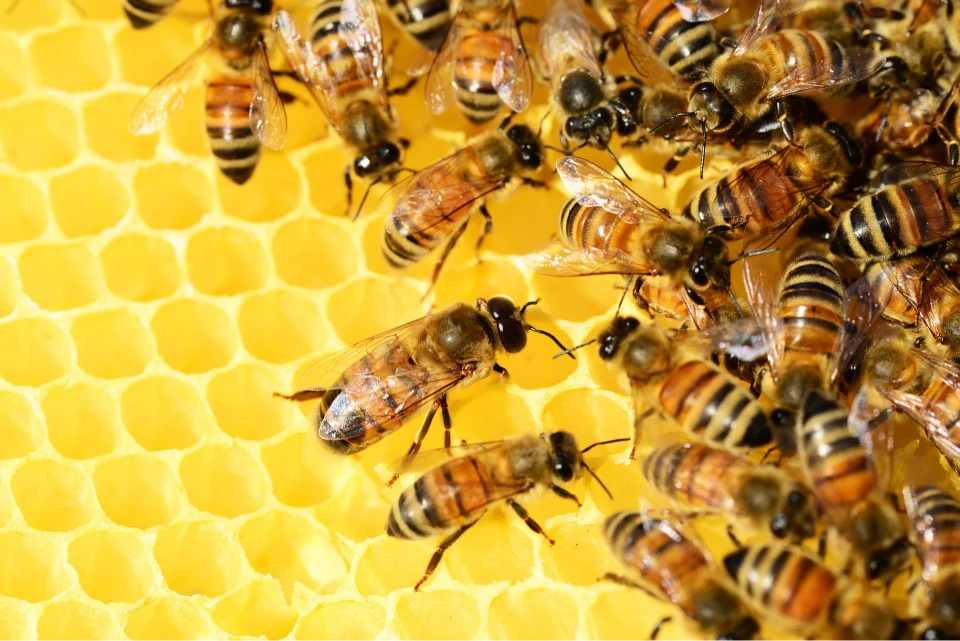
How Bees Make Honey: From Flower Nectar to the Jar on Your Table
Honey does not begin in a factory, a box, or a bottle.
It begins with millions of invisible decisions made by bees, guided by biology, climate, and survival instinct.
Most people know that bees make honey.
Very few understand how complex, intentional, and fragile this process actually is.
Understanding this process changes how you judge:
- Honey quality
- Crystallization
- Color and taste differences
- Raw vs processed claims
This guide explains how honey is made inside the hive, step by step, using real beekeeping science—not folklore.
Step 1: Nectar Collection – The Real Starting Point
Honey starts as nectar, not sugar.
Foraging worker bees fly out in search of flowering plants. Each bee:
- Visits 50–100 flowers per trip
- Chooses flowers based on nectar concentration
- Collects nectar in a special organ called the honey stomach
This nectar is:
- Mostly water (60–80%)
- Rich in natural plant sugars
- Different for every flower species
This is why honey flavor and color depend entirely on which flowers are blooming.
Step 2: Enzymatic Conversion – Where Nectar Becomes Honey
Inside the honey stomach, bees add natural enzymes, primarily:
- Invertase – breaks sucrose into glucose and fructose
- Diastase – supports sugar metabolism
- Glucose oxidase – creates mild antibacterial activity
This is a biochemical transformation, not storage.
By the time nectar reaches the hive, it is already chemically different from what the flower produced.
This step alone disproves the idea that honey is “just stored sugar.”
Step 3: Transfer Inside the Hive
Back at the hive:
- Forager bees pass nectar mouth-to-mouth to house bees
- This process is called trophallaxis
- Each transfer adds more enzymes and removes moisture
The nectar is now:
- Thicker
- More acidic
- Less hospitable to bacteria
This is how honey becomes self-preserving.
Step 4: Moisture Reduction – The Most Critical Stage
Fresh nectar cannot be stored long-term.
Bees reduce moisture by:
- Spreading nectar into thin layers inside honeycomb cells
- Fanning their wings to circulate warm air
- Evaporating excess water naturally
Target moisture level:
- Below ~18.5% for stable honey
- Higher moisture increases fermentation risk
This stage determines whether honey will:
- Last for years
- Ferment
- Crystallize naturally
Beekeepers who harvest too early interrupt this process.
Step 5: Sealing the Honey – Nature’s Quality Control
Once moisture is reduced and enzymes stabilize the honey:
- Bees seal the cell with beeswax
- This cap protects honey from air and contamination
Capped honey means:
- The bees consider it complete
- The honey is mature
- Long-term storage is possible
This is why experienced beekeepers wait for fully capped frames before extraction.
The Hive Structure: Who Does What?
A single hive typically contains 40,000–80,000 bees, divided into roles:
1. The Queen
- One per hive
- Lays 1,500–3,000 eggs per day
- Controls colony stability, not honey production
2. Worker Bees (Female)
- Do all the work
- Forage nectar
- Feed larvae
- Build wax
- Make honey
- Guard the hive
Workers live 4–6 weeks during active seasons.
3. Drones (Male)
- Purpose: mate with a queen
- Do not collect nectar
- Do not make honey
- Die after mating or are expelled before winter
Honey is entirely a worker-bee achievement.
How Much Honey Does a Hive Actually Make?
This surprises most people.
A healthy hive produces:
- Much more honey than bees consume
- Bees use honey mainly for:
- Winter survival
- Feeding larvae
- Energy during flight
Responsible beekeeping removes only excess honey, leaving enough for colony health.
This is why honey harvesting, when done properly, does not harm bees.
Why Bees Don’t Eat All the Honey
Honey is:
- Emergency food
- Long-term energy storage
- Survival insurance
Bees prefer fresh nectar when available.
Honey is preserved fuel, not daily food.
This is why honey remains intact in the hive until needed.
Flower Source Determines Everything
The type of flower determines:
- Color
- Taste
- Aroma
- Crystallization speed
- Medicinal properties
Examples:
- Beri honey → dark, dense, slow crystallization
- Acacia honey → light, mild, slow crystallization
- Citrus honey → light amber, fast crystallization
Bees do not mix flowers intentionally.
They forage where nectar is most abundant at that moment, which is why mono-floral honey is seasonal and rare.
Raw Honey vs Interrupted Honey-Making
If honey is extracted:
- Before moisture reduction
- Before enzymatic completion
- Before proper capping
It may:
- Ferment
- Lack enzymes
- Taste flat
- Require heating later to stabilize
This is where processing begins to replace biology.
Why This Knowledge Matters to Buyers
Once you understand how honey is made, you stop asking:
- “Is it thick?”
- “Is it clear?”
And start asking:
- Was it harvested in season?
- Was it fully capped?
- Was it overheated?
- Was moisture controlled naturally?
This is the difference between buying honey and understanding honey.
Frequently Asked Questions
Do bees make honey from sugar syrup?
No. Honey is made from nectar. Sugar feeding is used only for survival during nectar shortages and does not define harvest honey.
Why does honey crystallize if bees made it perfectly?
Crystallization is a natural glucose behavior, not a defect.
Can wild bees make honey differently?
The process is biologically similar, but volume, consistency, and accessibility differ.
Final Insight
Honey is not manufactured.
It is earned, drop by drop, through:
- Climate alignment
- Floral timing
- Colony health
- Biological precision
When honey is respected at every stage, it remains what nature intended it to be.